
Women's Health Month Checklist: 7 Things to Do for Your Health This May

Every May, Women's Health Month shows up on the calendar. Naturally, most of the coverage focuses on annual exams, sunscreen reminders, and heart health stats. These are all important, but there’s one that often misses the mention: your period.
Your menstrual cycle isn't just a reproductive event. It's a monthly report card for your whole body, from your nervous system, your gut, your stress response, your sleep, and your inflammation levels. When something is off-cycle, it's often a signal that something is off somewhere else. And when you're in pain every month? That's not your body failing you. That's your body asking for more support than "just push through it."
This Women's Health Month, we're making that support official. Here's a 7-step menstrual wellness checklist, because your period deserves to be part of the health conversation.
1. Stop Normalizing Period Pain
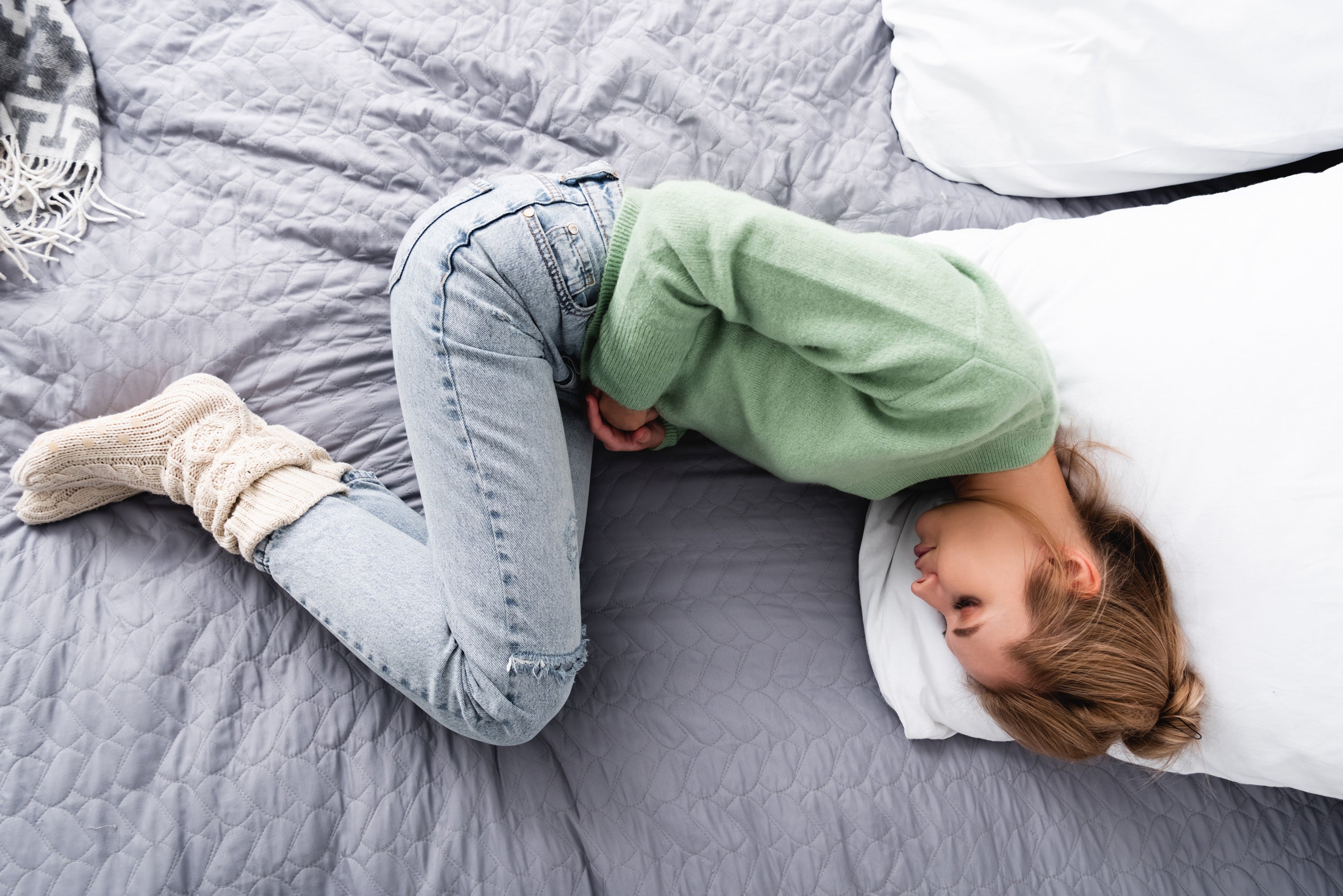
Let's start here, because everything else depends on it. Up to 90% of menstruating people experience dysmenorrhea (Ju et al.,2014), aka painful periods, but most have been told some version of "that's just how it is." It's not. Pain that disrupts your daily life, makes you cancel plans, or has you reaching for ibuprofen every month is a symptom, not a baseline.
This May, the first thing to add to your checklist is simple: stop accepting pain as normal. Talk to your provider about your symptoms. Track your cycle and your pain levels. We especially love tracking apps like Clue, Aavia, and Comma. These platforms help give your experience language and documentation to create an action plan with your healthcare provider, because you deserve care, not dismissal.
2. Learn What Your Cycle Is Actually Telling You
Your menstrual cycle has four phases: menstrual, follicular, ovulatory, and luteal. Each one shows up differently in your body, your energy, your mood, and your pain tolerance. Understanding your cycle means understanding yourself. A few things worth tracking this month (and every month):
-
Energy levels across the cycle (Many people feel a crash in the luteal phase. That's progesterone, not laziness)
-
Mood shifts that feel cyclical in nature: anxiety, irritability, or low motivation that follows a pattern
-
Digestion changes such as bloating, constipation, and diarrhea are all common period symptoms tied to prostaglandin activity
-
Sleep quality throughout the week before your period is often unpredictable. During this time progesterone drops sharply, usually disrupting deep sleep
This May, the first thing to add to your checklist is simple: stop accepting pain as normal. Talk to your provider about your symptoms. Track your cycle and your pain levels. We especially love period tracking apps like Clue, Aavia, and Comma. These platforms help give your experience language and documentation to create an action plan with your healthcare provider, because you deserve care, not dismissal.
3. Explore Drug-Free Pain Relief Options
Over-the-counter pain relief has its place. But if you're taking ibuprofen or naproxen every single cycle, sometimes for days at a stretch, it's worth knowing what else exists.
Transcutaneous auricular neurostimulation (tAN™) is one of the most exciting developments in non-hormonal, drug-free period pain relief. OhmBody’s tAN™ device delivers gentle electrical stimulation through a small earpiece, activating the vagus and trigeminal nerves to interrupt pain signals before they're processed as pain. Additionally, vagal stimulation brings your body out of fight or flight and into rest and digest, which helps your body return to regulated and more comfortable state (Czura, et al., 2025).
Clinical research on auricular neurostimulation has shown meaningful reductions in pain intensity for people with dysmenorrhea and, unlike NSAIDs, it doesn't affect your gut, liver, or cardiovascular system with repeated use.
Other evidence-backed drug-free options include:
-
Heat therapy: applied to the lower abdomen, it's been shown to be as effective as ibuprofen for mild-to-moderate cramping (Jo & Lee, 2018).
-
Magnesium supplementation: particularly magnesium glycinate, which may reduce uterine cramping and PMS symptoms (Parazzini et al., 2017).
-
Movement: low-intensity exercise like walking and yoga supports prostaglandin regulation and can reduce pain intensity over time (Carroquino-Garcia et al., 2019)
The goal isn't to replace medical care. It's to give you more tools, especially in the days when you need relief fast and don't want more medication.
4. Audit Your Stress Load
Stress and your menstrual cycle have a deeply bidirectional relationship, and most people don't realize how much one affects the other. Chronic stress elevates cortisol, which suppresses progesterone production. That can mean irregular cycles, heavier periods, worse PMS, and amplified pain perception. The nervous system, specifically its balance between sympathetic (fight-or-flight) and parasympathetic (rest-and-digest) states, plays a direct role in how intensely you experience period pain (Kalantaridou et al., 2004).
This month, do an honest audit:
-
Are you running on adrenaline most days?
-
Do you sleep enough, but still wake up exhausted?
-
Do your symptoms get significantly worse in high-stress months?
If yes to any of these, supporting your nervous system isn't optional, it's foundational to supporting your menstrual health. Other practices that activate the vagus nerve include: deep diaphragmatic breathing, cold exposure, humming, and meditation. These steps can directly support the parasympathetic state that reduces pain sensitivity and hormonal dysregulation.
5. Look at Your Gut Health
The gut-hormone connection is one of the most underappreciated aspects of menstrual wellness. Your gut microbiome contains a subset of bacteria called the estrobolome, which is responsible for metabolizing and eliminating estrogen. When the estrobolome is disrupted (by antibiotics, poor diet, chronic stress, or dysbiosis), estrogen can recirculate rather than clear, contributing to estrogen dominance, heavier periods, and worsened PMS (Baker et al., 2017).
What to consider:
-
Fiber intake: essential for estrogen clearance via the digestive tract
-
Fermented foods: yogurt, kefir, sauerkraut, kimchi support microbial diversity
-
Reducing ultra-processed foods: associated with increased systemic inflammation, which worsens cramping
-
Working with a provider if you have persistent GI issues around your period, this is often a clue worth investigating
6. Revisit Your Relationship with Hormonal Contraception
This one isn't a directive, but more an invitation to be informed. Hormonal contraception is a legitimate and valuable tool for many people. But it's also often the first and only thing offered for period pain, endometriosis symptoms, PCOS, or PMS, sometimes without a full conversation about what it does and doesn't do.
Hormonal birth control suppresses ovulation and the natural hormonal fluctuations of your cycle. For some people, that's the right call. For others, especially those who've never been offered alternatives,it's worth knowing:
-
Non-hormonal options for period pain management exist (like tAN™ neurostimulation)
-
Tracking your natural cycle can reveal patterns that inform better care or different lifestyle choices that might match your needs
-
If you've ever stopped hormonal contraception and felt like a different person, that's data and not coincidence
Talk to a provider who takes your full picture seriously! Ask what you haven't asked before and advocate for answers where you need it.
7. Build a Period Care Toolkit That Actually Works for You
"Self-care" in the period space has been reduced to bath bombs and chocolate. We're going to take it a step further. A real period care toolkit addresses pain, energy, mood, and nervous system regulation. It also meets your needs before, during, and after your period. Here's what a complete toolkit might include:
|
Support Category |
What It Looks Like |
|---|---|
|
Pain relief |
tAN™ neurostimulation device, heat patches, topical magnesium |
|
Hormonal support |
Magnesium glycinate, varying supplements that your provider would recommend, cycle tracking |
|
Nervous system |
Breathwork, vagus nerve activation, reduced stimulant intake in luteal phase |
|
Movement |
Gentle yoga days 1–2, walking, pelvic floor work |
|
Nutrition |
Anti-inflammatory foods, iron-rich foods post-period, omega-3s |
|
Mental health |
Cycle-aware scheduling, reducing obligations pre-period, therapeutic methods (talk, meditation, etc) |
|
Medical care |
Annual GYN exam, honest symptom tracking to share with your provider |
The goal is a toolkit you return to every month, not a one-off fix. The more consistently you support your body, the more your body can regulate itself!
The Bottom Line
Women's Health Month is a good reminder. But your menstrual health deserves attention every single month, not just May. Your period is a window into your nervous system, your hormones, your gut, your stress response, and your inflammatory load. Treating it as a whole-body experience isn't a wellness trend. It's just accurate!
Start with one item on this list. Make it real. And know that support, real, drug-free, science-backed support, exists with OhmBody.
References
1. Baker, J. M., Al-Nakkash, L., & Herbst-Kralovetz, M. M. (2017). Estrogen–gut microbiome axis: Physiological and clinical implications. Maturitas, 103, 45–53. https://doi.org/10.1016/j.maturitas.2017.06.025
2. Carroquino-Garcia, P., Jiménez-Rejano, J. J., Medrano-Sanchez, E., De La Casa-Almeida, M., Diaz-Mohedo, E., & Suarez-Serrano, C. (2019). Therapeutic exercise in the treatment of primary dysmenorrhea: A systematic review and meta-analysis. Physical Therapy, 99(10), 1371–1380. https://doi.org/10.1093/ptj/pzz101
3. Czura, C. J., Weyand, A. C., Baldwin, M. K., Recht, M., McWade, M. A., Covalin, A., & Khodaparast, N. (2025). Transcutaneous auricular neurostimulation to reduce heavy menstrual bleeding in women with and without von Willebrand disease. Frontiers in Medicine, 12, 1664433.
4. Ju, H., Jones, M., & Mishra, G. (2014). The prevalence and risk factors of dysmenorrhea. Epidemiologic Reviews, 36(1), 104–113. https://doi.org/10.1093/epirev/mxt009
5. Jo, J., & Lee, S. H. (2018). Heat therapy for primary dysmenorrhea: A systematic review and meta-analysis of its effects on pain relief and quality of life. Scientific Reports, 8(1), 16252. https://doi.org/10.1038/s41598-018-34303-z
6. Kalantaridou, S. N., Makrigiannakis, A., Zoumakis, E., & Chrousos, G. P. (2004). Stress and the female reproductive system. Journal of Reproductive Immunology, 62(1–2), 61–68. https://doi.org/10.1016/j.jri.2003.09.004
7. McLane, M., Montgomery, K., & Sidorowicz, H. (2025). Transcutaneous auricular neurostimulation to reduce heavy menstrual bleeding in women with and without von Willebrand disease. Frontiers in Medicine, 12, 1664433. https://doi.org/10.3389/fmed.2025.1664433
8. Parazzini, F., Di Martino, M., & Pellegrino, P. (2017). Magnesium in the gynecological practice: A literature review. Magnesium Research, 30(1), 1–7. https://doi.org/10.1684/mrh.2017.0419
Read more
Period pain is one of the most common health experiences among people who menstruate and one of the most consistently under-treated. Research suggests that up to 90% of people who menstruate experi...
If you've ever wondered why your hormones and athletic performance seem impossibly linked — why some training days feel effortless and others feel like you're moving through concrete — you're not i...