
How Long Should a Period Last?
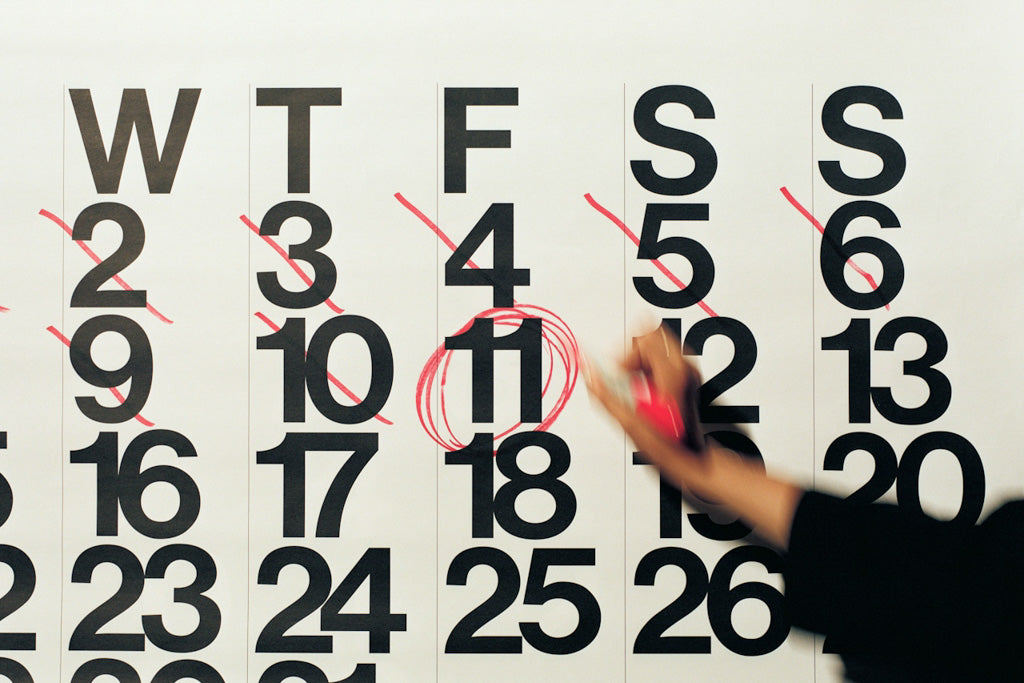
Quick TakeIf you’ve ever wondered whether your period lasts too long, ends too soon, or changes without warning, you’re not alone. At OhmBody, we believe better understanding starts with informed conversations about what’s typical—and when it’s worth checking in with a healthcare provider. Because “just deal with it” isn’t helpful, and your experience deserves attention. Let’s walk through what’s commonly seen, what may warrant a closer look, and how to start a productive conversation with your doctor. |
How Long Should a Period Last?
For many menstruating individuals, a typical period lasts between 3 and 7 days. Most women bleed for about 5 days, though anywhere in this range is considered medically normal for menstruating individuals of reproductive age.
| Period Length | What It Might Mean |
|---|---|
| 1–2 days | May be normal, especially for teens, those with low estrogen, or people on hormonal birth control. |
| 3–7 days | Considered a healthy, typical range for most menstruating people. |
| 8+ days | May be associated with heavier or prolonged bleeding and is a good reason to check in with a healthcare provider. |
What Affects Period Length?
Many factors can influence cycle length over time, and interpretation should always be guided by a healthcare professional.
| Factor | How It Can Affect Period Length |
|---|---|
| Age | Teens and women in perimenopause may have irregular cycles. |
| Hormonal birth control | May shorten or lighten your period—or stop it altogether. |
| Stress | Can delay or shorten menstruation. |
| Underlying health conditions | PCOS, fibroids, endometriosis, thyroid issues, or clotting disorders can all play a role. |
| Weight or BMI shifts | Rapid changes in weight can affect hormones and ovulation. |
What Counts as Heavy or Irregular?
It’s not just about the number of days. If your period feels unusually heavy, unpredictable, or disruptive, it’s worth exploring further with a healthcare provider. Common signs that prompt follow-up conversations include:
- Soaking through a pad or tampon every 1–2 hours
- Bleeding that requires double protection (tampon + pad)
- Bleeding more than 5 tablespoons each period (that's 80 mL for our metric fans)
- Passing clots larger than a quarter
- Feeling unusually fatigued or unable to function during your cycle
- Periods lasting longer than 7 days
Learn more about heavy menstrual bleeding here.

When to Talk to Your Doctor
Don’t settle for “it’s normal for you” if your period length or flow is affecting your daily life. You deserve clarity, thoughtful evaluation, and guidance from a healthcare provider:
- Your period lasts more than 8 days
- Bleeding is much heavier or lighter than usual
- You experience inconsistent cycles (less than 21 days apart or more than 35 days)
- You feel persistently fatigued or have concerns about iron levels or overall energy
How to Start the Conversation with Your Doctor
Bringing up any period irregularities might feel awkward—but it shouldn’t be. Your provider is there to help, and your cycle offers valuable clues about your overall health.
Before your appointment, try tracking your symptoms for a few cycles and bringing those notes to your appointment. You may want to gather:
- How many days are you bleeding?
- How heavy is the flow?
- Are you skipping periods or bleeding between them?
- Is your period exceptionally uncomfortable or even painful?
A simple opener like, “I’m not sure what’s normal for my period anymore—can I walk you through what I’ve been noticing?” can go a long way. You deserve to feel heard, and your personal experience deserves medical attention.
| Frequently Asked Questions | |
|---|---|
| Q: Is a 2-day period normal? | A: It can be, especially for teens, people on hormonal birth control, or during perimenopause. But if your period is consistently short and you're concerned, check in with your doctor. |
| Q: What if my period suddenly changes? | A: Hormones, stress, and health conditions can all cause changes. Track your cycle and talk to your provider if shifts persist. |
| Q: Can stress shorten my period? | A: Yes. High stress can influence hormone signaling, which may affect ovulation timing and cycle length. |
| Q: What’s the best way to track my period? | A: Use a period tracking app, other health tracking wearables, or a simple notes log. Track flow, length, clots, pain, and any unusual changes. |
You Deserve Period Support That Fits Your Life
If your cycle feels disruptive or hard to predict, you’re not alone. OhmBody is a wearable wellness device designed to support comfort and relaxation during menstruation—without drugs or hormones.
OhmBody uses gentle, noninvasive neurostimulation as part of a wellness routine that many women find supportive alongside medical care and healthy lifestyle habits. It is not intended to diagnose or treat menstrual conditions, but to complement how you care for yourself throughout your cycle.
Learn more about how OhmBody fits into menstrual wellness routines.
Key Takeaways
- A typical period often lasts 3–7 days, though experiences vary.
- Bleeding lasting longer than 7–8 days is a good reason to talk with a healthcare provider.
- Tracking your cycle can help you notice changes worth discussing with your doctor.
- OhmBody is a non-hormonal, wearable wellness device designed to support comfort and relaxation during menstruation.
Friendly heads-up:
This content is here to inform, support, and start good conversations — not to replace medical advice. OhmBody is a wellness device designed to support comfort and overall well-being during menstruation, including areas like mood, sleep, focus, energy, and digestion. It’s not a medical treatment. Always check in with a qualified healthcare provider about symptoms, diagnoses, or care decisions. Your body deserves expert backup.
Citations:
The following sources provide general educational guidance on menstrual health and should not replace personalized medical advice.
- American College of Obstetricians and Gynecologists. Using Your Menstrual Cycle As A Vital Sign. https://www.acog.org/clinical/clinical-guidance/committee-opinion/articles/2015/12/menstruation-in-girls-and-adolescents-using-the-menstrual-cycle-as-a-vital-sign).
- Cleveland Clinic. Heavy Menstrual Bleeding. https://my.clevelandclinic.org/health/diseases/17734-menorrhagia-heavy-menstrual-bleeding.
- Mayo Clinic. Menorrhagia (Heavy Menstrual Bleeding). https://www.mayoclinic.org/diseases-conditions/menorrhagia/symptoms-causes/syc-20352829. Accessed July 2025.
Read more
If you’ve ever left a doctor’s appointment thinking, “I forgot to mention that,” or “I didn’t know how to explain what was really going on,” you’re in good company. When it comes to periods, many w...
OhmBody brings this science-informed approach into a wearable, drug-free, hormone-free wellness device designed to support comfort, predictability, and confidence during menstruation — without aski...